
The RBI on Wednesday slashed key interest rate by 25 basis points, for the second time in a row, to support a shuttering economy hit by reciprocal tariffs imposed by the US. Following the rate cut, the key policy rate eased to 6 per cent providing relief to home, auto and corporate loan borrowers.

In 2025 banks are in for challenges such as pressure on margins and slowing credit growth. With the likelihood of a repo rate cut in February or April, external benchmark-linked loans of banks will be repriced immediately. However, deposit rates are expected to adjust more gradually, which could impact the net interest margin (NIM) - a key measure of profitability for banks.

Net NPAs increased to Rs 36,260 crore in the December quarter from Rs 34,843 crore in September and Rs 33,116 crore in December 2023, observes Tamal Bandyopadhyay.

P K Mishra, a retired IAS officer of the Gujarat cadre, is currently serving as the principal secretary to the prime minister.
In January, the RBI hiked its cash reserve ratio or the amount banks keep with the central bank by 0.75 per cent to 5.75 per cent.

The new rate will be effective from December 8. The primary liquidity made available to the system through these measures is worth over Rs 3,00,000 crore (Rs 3,000 billion), RBI Governor D Subbarao said in Mumbai.

High frequency indicators, like vehicles sales, air traffic, steel consumption and GST E-way bills, point towards a sequential pickup in momentum of economic activity during the second half of the fiscal 2024-25 and sustain moving forward, RBI Bulletin said on Wednesday. However, a strong dollar, driven by US economic resilience and trade policy pivots, could exacerbate capital outflows from emerging economies, push risk premiums higher, and intensify external vulnerabilities, said an article on 'State of the Economy' published in RBI's February bulletin.

While liquidity in the banking system has turned surplus in the last few weeks, it could go back to deficit again, mainly due to corporate advance tax outflows. The net liquidity surplus of the banking system rose to touch Rs 1 trillion on Tuesday on the back of government spending, according to the data released by the Reserve Bank of India.
The liquidity will move into deficit after advance tax payments and GST outflows. It will rebound in October because of government spending.
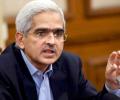
The December meeting of the Reserve Bank of India's (RBI's) six-member Monetary Policy Committee (MPC) will start on Wednesday even as there is no clarity on whether Governor Shaktikanta Das, the chair of the panel, will continue in office after his term ends next week. The outcome of the meeting will be announced on Friday by Das at 10 in the morning.

Institutional investments in Indian real estate have seen a strong start to 2025, with inflows reaching $ 1.3 billion in the first quarter - a 31 per cent year-on-year (YoY) increase. This growth was primarily driven by domestic investments, which accounted for 60 per cent of the total inflows during the quarter. With $ 0.8 billion inflows, domestic investments saw a 75 per cent annual rise and were largely focused on industrial & warehousing and office segments.

Brokerages expect a further slowdown in Indian firms' revenue and earnings growth in Q4FY25, following low single-digit growth in the preceding three quarters, as factors like weak consumer demand and credit growth linger on.

The repo rate, at which the central bank lends short-term money to other banks, will continue to stay at 6 per cent.

Given the relevance of bank deposits for Indian savers, whether the regulator would permit linking savings interest rate to a repo-like structure needs to be seen, as a move of this nature could increase volatility in savings also.

Exporters on Thursday sought a fund of Rs 750 crore for three years to tap USD 25 billion export potential in the US, aiming to seize potential opportunities that may arise as the US President-elect, Donald Trump, has threatened to impose high tariffs on Chinese goods. In its pre-Budget meeting with the finance ministry, Federation of Indian Export Organisations (FIEO) President Ashwani Kumar has also demanded extension of the five per cent Interest Equalisation Scheme (IES).

Widespread use of crypto assets, including stablecoins, can have a negative impact on the macroeconomic and financial stability of a country, the Reserve Bank of India (RBI) said on Monday. In its Financial Stability Report (FSR), the banking regulator highlighted that excessive use of crypto assets can reduce effectiveness of monetary policy, worsen fiscal risks, circumvent capital flow management measures, divert resources available for financing the real economy and threaten global financial stability.

India Inc on Friday said it is looking forward to a repo rate cut in future as cost of funds has to come down in coming times, and expects continuation of accommodative policy stance by the Reserve Bank of India (RBI). The RBI decided to leave the benchmark interest rate unchanged at 4 per cent but maintained an accommodative stance, as the economy faces the brunt of the second COVID-19 wave. Sanjay Aggarwal, president of PHD Chamber of Commerce and Industry, said the RBI has maintained an accommodative stance as long as necessary to revive and sustain growth on a durable basis and to mitigate impact of COVID-19, apart from an aim to keep inflation within the target.

'A possible post-election growth momentum may be lost.'

'If it doesn't, it will continue with measures to infuse liquidity, signalling a new cycle,' predicts Tamal Bandyopadhyay.

The Reserve Bank of India on Friday decided to keep the policy rate unchanged for the 11th time in a row but sharply lowered the GDP growth forecast to 6.6 per cent for the current fiscal, as against earlier projection of 7.2 per cent. The Reserve Bank of India (RBI) maintained the status quo on interest rate despite July-September quarter GDP growth falling to 7-quarter low of 5.4 per cent, as against its own projection of 7 per cent.

'I think today RBI supervision is much sharper than what it was earlier.'
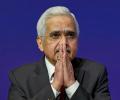
Outgoing Reserve Bank Governor Shaktikanta Das said on Tuesday that restoring inflation-growth balance is the most important task ahead of the central bank. Addressing a press conference on his last day as the central bank chief, Das said his successor will have to navigate the changing world order, effectively deal with cyber threats, and focus on harnessing new technologies.

The growth was primarily driven by domestic investments, which accounted for 60 per cent of the total inflows during the first quarter of the financial year.

The Reserve Bank of India (RBI) on Wednesday announced to increase the policy repo rate by 50 basis points to 4.9 per cent, the second hike in five weeks aimed at quelling the inflation. The MPC vote was unanimous and has decided to keep stance withdrawal from accommodative, RBI Governor Shaktikanta Das said in a press conference on Wednesday. The decision was taken during a three-day meeting of the RBI's Monetary Policy Committee (MPC) to review the interest rates in the country. The MPC voted unanimously to increase the policy repo rate by 50 bps to 4.90 per cent," Das said.
'Growth, liquidity and deposit mobilisation are likely to be discussed during the interaction.'

To ease the potential liquidity stress, the Reserve Bank on Friday slashed Cash Reserve Ratio (CRR) by 50 basis points to 4 per cent, a move that would unlock Rs 1.16 lakh crore bank funds. The RBI on May 4, 2022 had raised CRR to 4.5 per cent from 4 per cent in an off-cycle Monetary Policy Committee (MPC) meeting, with effect from May 21 the same year.
Reserve Bank of India (RBI) is unlikely to cut the benchmark interest rate at its upcoming monetary policy review meeting, taking place soon after the announcement of the Lok Sabha election results, amid inflation challenges, said experts. The Monetary Policy Committee (MPC) may also refrain from rate cut as economic growth is picking up, notwithstanding the elevated interest rate of 6.5 per cent (repo) prevailing since February 2023. The meeting of the Reserve Bank Governor Shaktikanta Das headed MPC is scheduled for June 5 to 7.
The Reserve Bank is unlikely to ease the benchmark policy rate during 2024 given the uncertainty over food inflation, State Bank of India (SBI) chairman C S Setty has said. The US Federal Reserve's first cut in interest rates in more than four years is expected soon, triggering central banks in other economies to follow suit. "On the rate front, a lot of central banks are taking independent calls.

The wholesale price inflation rose to 1.84 per cent in September as food items, especially vegetables, turned costlier, as per the government data released on Monday. The wholesale price index (WPI)-based inflation was 1.31 per cent in August. It was (-)0.07 per cent in September last year.
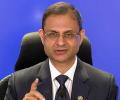
'We will be very, very proactive in providing whatever liquidity requirements are needed.'
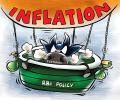
Amid a debate on the basis of a monetary policy stance, one may be curious enough to know how non-food retail inflation has behaved over the years in India. Let the eager souls catch a glimpse of facts. In the past 10 years, non-food inflation came down below 4 per cent on two occasions - pre-Covid period of 2019-20 and now in the first four months of the current financial year (FY25).

Wholesale price inflation rose to a 4-month high of 2.36 per cent in October as prices of food items, especially vegetables, and manufactured goods turned dearer, as per the government data released on Thursday. The wholesale price index (WPI) based inflation was 1.84 per cent in September 2024. It was (-) 0.26 per cent in October, last year.

The MPC headed by RBI Governor Urjit Patel said that the recent excise duty cut by the government on petrol and diesel will help contain inflation.

Reserve Bank Governor Shaktikanta Das on Friday said that this stage would have been "premature" and "very very risky" as the retail inflation is still high, and future monetary policy action would depend upon the income data and outlook. Earlier this month, the RBI continued to maintain the status quo in the short-term lending interest rate (repo), citing inflationary concerns, though it changed the monetary policy stance to neutral.
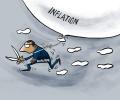
Wholesale price based inflation declined to a 3-month low of 1.89 per cent in November on cheaper food items, and experts predicted a 0.25 per cent interest rate cut by the RBI in the policy review in February. The Wholesale Price Index (WPI) based inflation was 2.36 per cent in October 2024. It was 0.39 per cent in November, last year. In August, 2024, it was 1.25 per cent.

Housing sales are likely to be hit, especially in affordable and mid-income categories, following the RBI's decision to hike repo rate, according to real estate developers and consultants. However, the impact of RBI's decision to raise the benchmark lending rate by 50 basis points to 5.40 per cent is expected to be for a short term, they added. This is the third consecutive rate hike after a 40 basis points and 50 basis points increase in May and June, respectively.

Shares of state-owned bank stocks were under pressure on Monday due to muted deposit and credit growth numbers reported by these lenders in the October-December quarter (Q3) of 2024-25 (FY25). The Nifty PSU Bank index was down 4 per cent, with Union Bank of India emerging as the biggest loser as its shares fell 7.5 per cent to close at Rs 114.7, followed by a 5.7 per cent drop in shares of Bank of Baroda (BoB) to Rs 228 and a 4.7 per cent slide in shares of Bank of India to Rs 99.8 on the National Stock Exchange.

'Young investors should focus more on equity, while retired senior citizens should prioritise fixed income.' 'Mid-career investors should aim for a balanced allocation.'
The capital market regulator would soon write to the Reserve Bank of India to allow repos in corporate bonds, which were expected to boost the liquidity in the corporate debt market, said sources. In a repo trade, a market participant pledges a corporate paper in exchange for funds for a specific period and at a rate determined by the market.

From the 30-share pack, Adani Port, Bharti Airtel, Asian Paints, IndusInd Bank, Bajaj Finserv, Reliance Industries, Infosys, UltraTech Cement, HDFC Bank, HCL Technologies and ICICI Bank were among the laggards. Tata Motors, Axis Bank, Maruti, Larsen & Toubro, ITC and Tata Steel were among the gainers.
